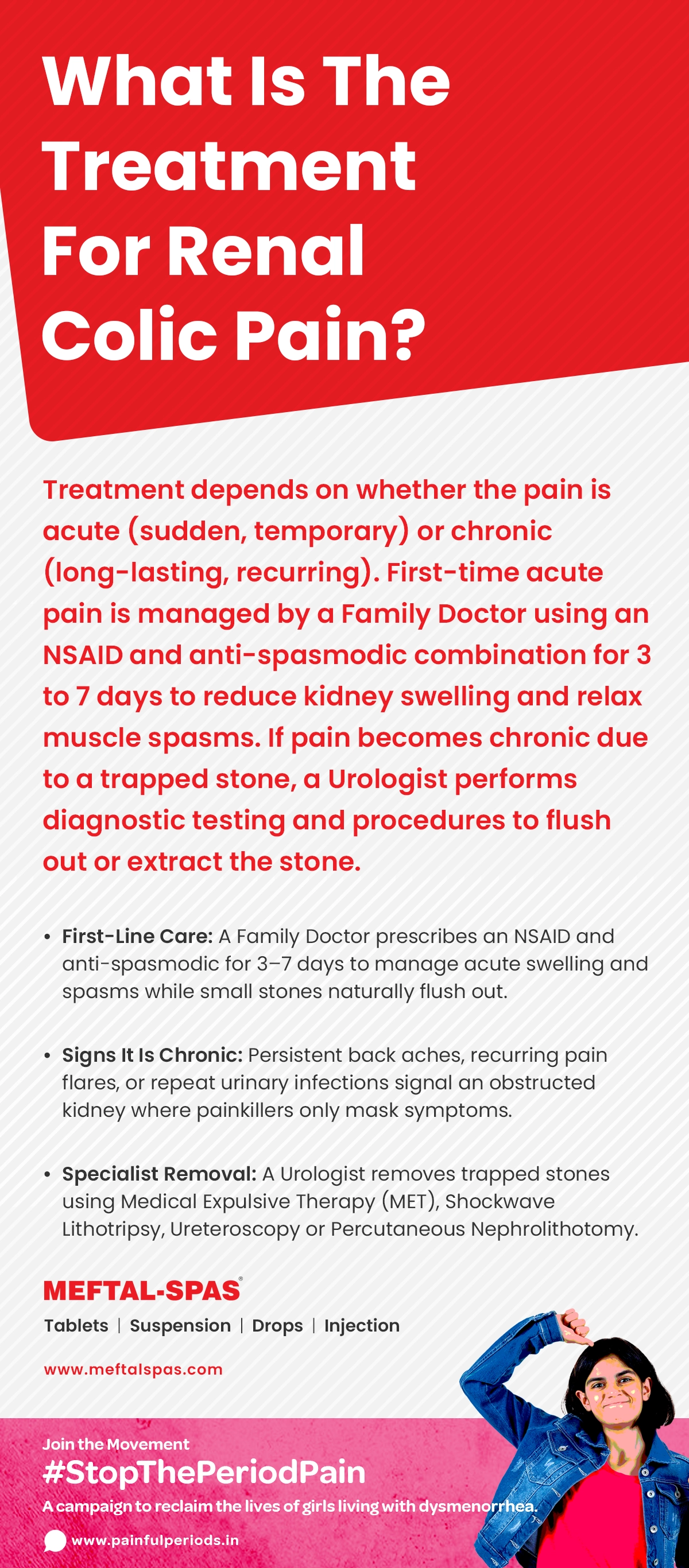
The treatment for renal colic pain depends on whether it is acute pain (sudden, intense, and temporary pain) or chronic pain (pain that is long-lasting or recurring over weeks). For anyone experiencing renal colic for the first time, the first preferred line of treatment is a combination of an NSAID and an anti-spasmodic drug. This provides targeted relief by reducing swelling inside the kidney and relaxing the squeezing muscles of the urinary tube (ureter).
Acute Renal Colic Pain Management by Your Family Doctor (GP)
When acute kidney stone pain strikes for the first time, your initial evaluation and treatment are typically handled by your local General Practitioner (GP) or Family Physician.
- How the Medicine Works: Your GP will prescribe a dual-action combination of an NSAID and an anti-spasmodic to calm inflammation and stop painful ureteral spasms.
- How Long Will a Doctor Prescribe This? A GP will generally prescribe these medications for a short duration – typically 3 to 7 days. This window allows small stones to pass naturally while keeping pain under control.
If a stone gets permanently lodged, blocks urine flow completely, or is too large to move, the pain stops being temporary. It progresses into chronic pain as ongoing pressure builds up in the kidney, causing recurring flares, persistent lower back aches, or repeated urinary infections. At this stage, painkillers only mask symptoms rather than solve the problem.
Chronic Renal Colic Pain Management by Urologist
When renal colic pain becomes chronic, persistent, or fails to resolve within a few days, your GP will refer you to a Urologist. The Urologist will conduct diagnostic tests (such as a CT scan or ultrasound) to locate the stone, check for kidney blockage, and select the best procedure to remove the stone from your body.
| Treatment Type | How It Works | Best Suited For | How Kidney Stones Exit the Body |
|---|---|---|---|
| Medical Expulsive Therapy (MET) | Prescription alpha-blocker medications relax the lower ureter walls allowing the stone to flush out naturally. | Small kidney stones | Natural Passage: The stone is flushed out naturally through your normal urine stream. |
| Shockwave Lithotripsy | High-energy sound waves focused from outside the body shatter the stone into tiny particles. | Small kidney stones | Flushed as Dust: Stone fragments pass out painlessly through your urine over the following days/weeks. |
| Ureteroscopy | A thin scope is guided up the urinary tract; a laser breaks the stone, or a micro-basket grabs it. | Kidney or ureter stones | Extracted directly by the surgeon using a basket, with remaining tiny dust flushed through urine. |
| Percutaneous Nephrolithotomy | Keyhole surgery where a scope is inserted through a small incision directly in your back. | Large or complex kidney stones | Removed mechanically through the keyhole incision during the surgery itself. |