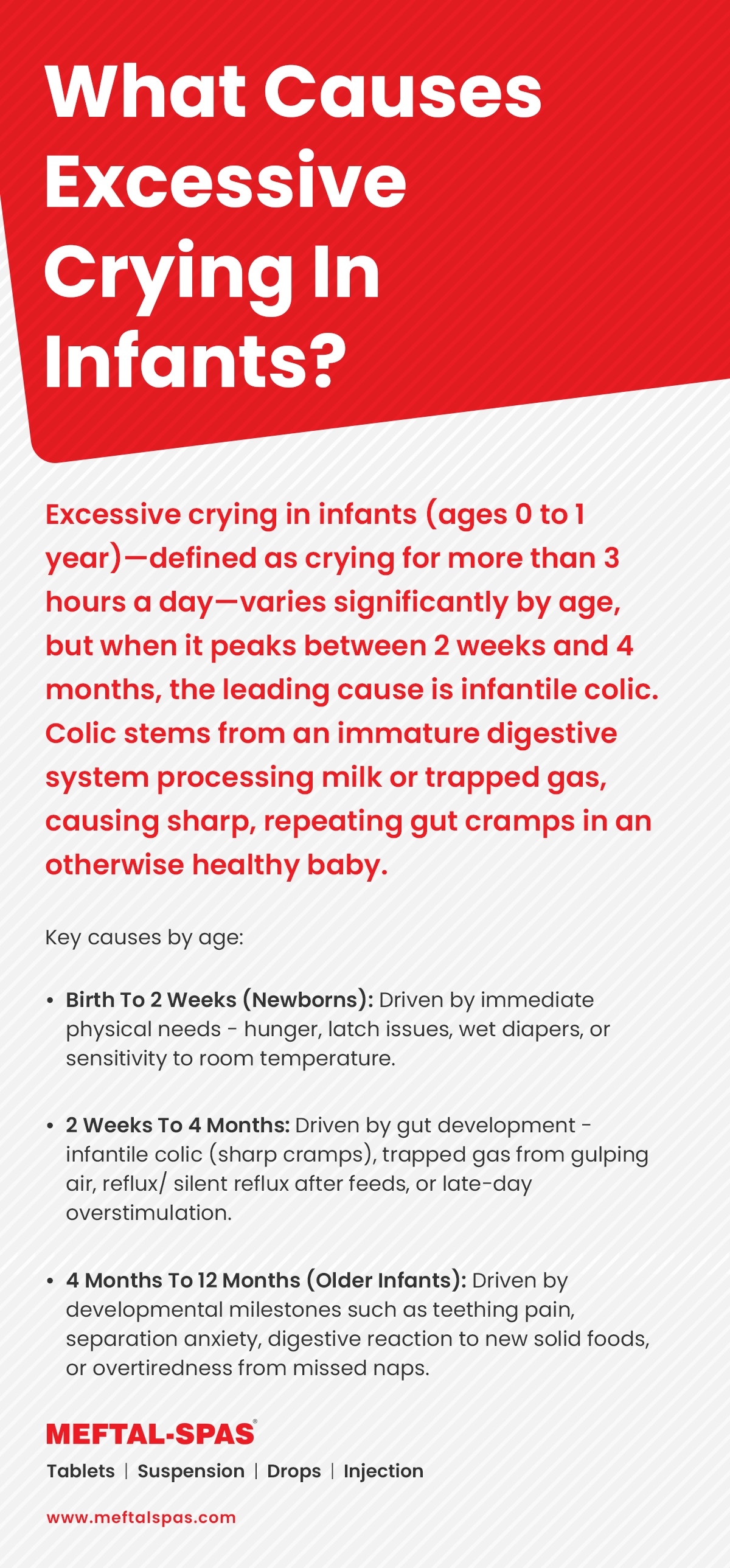
Excessive crying in infants (ages 0 to 1 year) – medically defined as crying for more than 3 hours a day – can stem from several causes depending on the baby’s age. However, when intense crying peaks between 2 weeks and 4 months, the most common cause is infantile colic. This refers to sharp, repeating gut cramps caused by an immature digestive system or trapped gas, leading to prolonged, inconsolable crying in an otherwise healthy baby.
Below are the most common reasons for excessive crying in infants by age.
Birth to 2 Weeks: Early Newborn Stage
Crying is almost exclusively a communication tool for primary physiological needs or immediate physical discomfort:
- Hunger & Feeding Adjustments: Cluster feeding (want to feed many times over a couple of hours) or difficulty establishing a proper latch.
- Temperature Sensitivity: Overheating or feeling too cold due to immature body temperature regulation.
- Physical Discomfort: Wet or soiled diapers, tight swaddling, or skin irritation.
2 Weeks to 4 Months
Intense, inconsolable crying episodes, driven primarily by gut development:
- Infantile Colic (Primary Cause): Sharp, repeating gut cramps caused by an immature digestive tract processing milk or gas.
- Trapped Gas & Air Swallowing: Incomplete burping or gulping air during rapid feeding.
- Reflux / Silent Reflux: Stomach acid flowing back up into the esophagus, causing a burning sensation after feeding.
- Over Stimulation: An immature nervous system becoming overwhelmed by evening household noise, lights, and stimulation.
4 Months to 12 Months: Older Infant Stage
Infantile colic resolves as the gut matures, but the crying is because of developmental and structural triggers:
- Teething Pain: Sore, inflamed gums as primary teeth begin to emerge (typically around 6 months).
- Separation Anxiety: Growing awareness of caregivers, leading to distress when out of sight.
- Diet: Dietary sensitivities to newly introduced solid foods.
- Overtiredness: Missed nap windows making it difficult for the baby to settle down.